Category: Uncategorized

  • I’m Successful Because I’m Lazy

    I’m Successful Because I’m Lazy

    I don’t want to be working. Not a little less. Not a better version of it. At all.

    If I’m being honest, I would rather be spending my time with my family. Sitting outside. Traveling. Having long conversations. Doing things that actually feel like living. Work is not that for me.

    But I’m also very good at what I do. And I care about making good money. So instead of trying to learn how to love working, I’ve done something else. I’ve gotten very good at minimizing it.


    I think a lot of people assume success comes from working more. More hours. More effort. More output.

    That’s never made sense to me. If anything, I’ve always had the opposite instinct.

    If something takes too long, I want to figure out how to make it take less time. If something feels unnecessarily complicated, I assume there’s a simpler way. If something is repetitive, I don’t want to get better at doing it. I want to stop doing it entirely.

    Not because I don’t care. Because I don’t want to be doing it in the first place.


    That mindset forces you to get good at very specific things.

    You learn how to get to the point quickly. You learn what actually matters and what doesn’t. You learn how to produce results without a lot of wasted motion. You get comfortable cutting things that don’t need to exist. And you stop confusing effort with value.


    I don’t want to spend my day buried in work. So I’ve learned how to do it faster. Cleaner. More directly.

    I’ve learned how to make decisions quickly. How to prioritize what actually moves something forward. How to ignore the noise. How to finish things without dragging them out.


    And at a certain point, you realize you don’t need to be doing everything yourself.

    Not everything deserves your time. Not everything requires your attention. Some things can be handed off. Some things can be simplified. Some things can disappear entirely.

    Delegation stops feeling like a management skill and starts feeling like self-preservation.


    There’s also something else that happens when you don’t want to be working all the time.

    You protect your energy differently. You don’t waste it on things that don’t matter. You don’t volunteer for unnecessary complexity. You don’t build systems that require constant effort just to maintain.

    You start designing your work in a way that supports your life. Not the other way around.


    I still care about doing things well. I care about being effective. I care about being someone people trust and want to work with. That’s part of how you keep high-paying opportunities.

    But I have no interest in earning that by working more than necessary.


    If anything, my goal has always been simple.

    Do good work. Get paid well. And get back to my life.


    Calling it laziness might not be entirely accurate. But it’s close enough.

    I don’t want to spend my life working. So I’ve gotten very good at making sure I don’t have to any more than necessary.

    And that, more than anything, is what’s made me successful.de me successful.

    Comfortably Uncertain,

    Krista
  • Why Your Network Is the Most Underrated Job Search Tool You Have

    Why Your Network Is the Most Underrated Job Search Tool You Have

    I’ve been in my field for over a decade.

    In that time, I’ve held a lot of jobs. And all but two of them came from a referral — someone I’d worked with before, stayed in touch with, or had simply taken the time to know.

    Not my resume. Not a job board. Not a recruiter cold email.

    A person who thought of me when an opportunity came up.

    That’s what a network actually does when you’ve built one with intention.


    People hire people they know and trust.

    Job postings are public. Your competition on any given application is enormous.

    But a referral skips the line entirely.

    When someone vouches for you, you walk into the process with credibility already attached. The hiring manager isn’t starting from zero — they’re starting with a reason to believe in you.

    That’s an advantage no resume formatting tip can replicate.


    Your network is already working for you — or it isn’t.

    Here’s the thing most people don’t realize: your network is active whether you tend to it or not.

    If you’ve stayed in touch with former colleagues, shown up for people, and been someone worth remembering — it’s working for you right now, even when you’re not job hunting.

    If you’ve gone quiet, stayed siloed, and only reached out when you needed something — it’ll feel like starting from scratch every time.

    The key is consistency.


    You don’t need a big network. You need a real one.

    Don’t start collecting LinkedIn connections like trading cards.

    A handful of people who genuinely respect your work will open more doors than five hundred lukewarm follows ever will.

    Think about the people you’ve worked with who saw you at your best. Former managers. Colleagues who became friends. People whose work you admired. Those relationships — even the ones that have gone quiet — are worth rekindling.

    Most people are glad to hear from someone they once worked well with. You’re probably overthinking the reach-out.


    And if you’re starting from scratch — that’s okay.

    Not everyone has a decade of connections to lean on. Some people are switching industries. Some are early in their careers. Some are moving to a new country and rebuilding everything from the ground up.

    A network isn’t something you either have or don’t. It’s something you build — one conversation, one connection, one genuine interaction at a time.

    Start where you are. Comment thoughtfully on posts in your field. Show up in online communities. Reach out to people whose work you respect — not to ask for anything, but to say something real.


    The best time to build your network was yesterday.

    The second best time is right now — before you need it.

    Stay present. Stayed generous. Stay in touch.

    These relationships will pay you back 100 fold.

    Comfortably Uncertain,

    Krista
  • The 5 Things You Must Have Before You Can Get a Remote Job

    The 5 Things You Must Have Before You Can Get a Remote Job


    Remote work isn’t a trend anymore. It’s just work.

    But that doesn’t mean everyone gets access to it. The market is competitive, the bar is real, and “I want to work from home” is not a qualification.

    You’re here because you want in — and you want to know what’s actually standing between you and a job that doesn’t require pants or a commute.

    The internet is full of advice that amounts to “be good at things and apply.”

    Groundbreaking. This isn’t that.

    These are the five things that actually move the needle — the ones that separate the people who land remote roles from the ones who are still refreshing LinkedIn six months later.


    1. A LinkedIn profile that doesn’t look like a graveyard

    If your last update was three jobs ago and your headline still says “Seeking New Opportunities,” you’re already losing.

    Remote hiring moves fast. Recruiters aren’t detectives — they’re not going to piece together your potential from a sparse profile.

    Your LinkedIn needs to be active, specific, and optimized for the kind of role you want. A headline with keywords. A summary that sounds like a human wrote it. Recent activity that signals you’re engaged.

    Visibility is currency in remote job hunting.


    2. A skill set you can actually demonstrate

    “Hard worker” and “team player” are not skills.

    Neither is “proficient in Microsoft Office” — unless it’s 2003, in which case, hello, time traveler.

    Remote employers need to trust you can do the work without someone looking over your shoulder. That trust starts with proof.

    A portfolio. A case study. A GitHub. A body of writing. Whatever your field calls for — you need something tangible to point at.

    Telling people you’re good at something is a lot less convincing than showing them.


    3. A home setup that actually works

    Nobody’s expecting a broadcast studio.

    But a chaotic background, an echo-y room, and internet that drops every 20 minutes will sink you — especially in the interview stage.

    Remote companies hire for remote readiness. If your setup signals that you haven’t thought this through, that’s the message they take into their hiring decision.

    A clean, quiet space and a reliable connection aren’t perks. They’re the price of admission.


    4. The ability to communicate in writing — and do it well

    In a remote environment, most of your work happens in writing.

    Slack messages. Emails. Project updates. Async feedback. It’s all text.

    If your written communication is unclear, slow, or easy to misread, you will struggle. Full stop.

    The candidates who write clearly and concisely stand out immediately — because a lot of people genuinely cannot.


    5. A positioning strategy — not just a resume

    A resume is not a strategy. It’s a document.

    The people who land remote jobs intentionally are the ones who’ve thought about who they want to work for, what problem they solve, and how they show up across every touchpoint.

    Resume. LinkedIn. Portfolio. Outreach. All of it needs to point in the same direction.

    Spray-and-pray applications rarely work in competitive remote markets. Clarity of direction isn’t just motivating — it’s a tactical advantage.


    None of this is complicated. But all of it requires intention.

    Remote work doesn’t come to people who are passively hoping for it. It comes to people who’ve done the work to be ready for it.

    If you’re not sure where to start, start with whichever one on this list made you wince the most.

    That’s your answer.

    Comfortably Uncertain,

    Krista
  • 20 Questions to Ask Yourself Before Moving Abroad

    20 Questions to Ask Yourself Before Moving Abroad

    Everyone romanticizes the idea of moving abroad.

    Cheaper rent. Slower mornings. Beautiful weather. A fresh start somewhere far away from the life you built before.

    But the truth is that moving abroad isn’t just a travel decision — it’s a life design decision.

    And the people who thrive after moving are usually the ones who ask themselves a few uncomfortable questions before they ever buy the plane ticket.

    If you’re seriously considering living abroad, here are twenty questions worth sitting with first.

    The 10 Questions

    1. Do I want to move, or do I just need a vacation?

    Sometimes the urge to leave everything behind is really just a sign that you’re burned out.

    A long break, a change of scenery, or a slower season of life can solve a lot of things that relocation won’t.


    2. Can I realistically be away from family and close friends for extended periods of time?

    Distance changes relationships.

    Even with video calls and messaging, living abroad often means missing birthdays, holidays, and everyday moments.

    Some people handle that easily. Others find it much harder than they expected.


    3. Can I legally and sustainably work in my new country?

    This is one of the most practical questions — and one of the most overlooked.

    Understand your visa options, remote work situation, and whether your income will realistically support the lifestyle you’re envisioning.


    4. Does my new country have the infrastructure I require?

    Things like internet reliability, healthcare quality, transportation systems, and access to everyday services can vary dramatically between places.

    What feels normal where you live now may look very different somewhere else.


    5. Am I ready to adapt to a new culture, customs, and traditions?

    Living somewhere is very different from visiting.

    Things will be done differently — and that’s part of the experience.

    The question is whether you’re excited to learn those differences or frustrated by them.


    6. What am I hoping this move will change about my life?

    People often move abroad hoping for a slower, more intentional life.

    That can absolutely happen — but it’s worth understanding what you expect to be different.


    7. What happens if those things don’t change right away — or at all?

    Sometimes life abroad looks surprisingly similar to life at home.

    You still work. You still have responsibilities. You still have ordinary days.

    Being realistic about that makes the transition much easier.


    8. How do I handle uncertainty, inconvenience, and things not going as planned?

    New countries mean new systems.

    Banking, paperwork, housing, and government processes can sometimes be slower or more confusing than you’re used to.

    Patience goes a long way.


    9. Am I comfortable feeling like an outsider for a while?

    Even in welcoming places, it takes time to feel like you belong.

    You might not understand every cultural reference, social norm, or conversation right away.

    That’s a normal part of the process.


    10. How important is convenience to me in my daily life?

    Some countries offer incredible quality of life but less convenience.

    Things may take longer. Systems may be less streamlined.

    For some people, that trade-off feels completely worth it.


    11. Can I slow down without feeling anxious, unproductive, or behind?

    A slower lifestyle can be wonderful — but it can also feel uncomfortable at first if you’re used to constant productivity.

    Learning how to enjoy a different pace takes time.


    12. What parts of my identity are tied to where I currently live?

    Where you live often shapes who you are.

    Your job, routines, friendships, and social environment all contribute to your sense of identity.

    Moving can shift that in ways you may not expect.


    13. How do I respond when familiar routines and structure disappear?

    One of the biggest adjustments abroad is rebuilding everyday structure.

    New grocery stores. New routes. New habits.

    Some people thrive in that process. Others struggle without familiar routines.


    14. What trade-offs am I willing to accept — and which ones would eventually feel like dealbreakers?

    Every lifestyle comes with trade-offs.

    Living abroad may mean giving up certain conveniences while gaining other things that matter more.

    Being honest about your limits helps prevent long-term frustration.


    15. How adaptable am I when systems are inefficient or unclear?

    Not every place runs as smoothly as the systems you might be used to.

    Sometimes things take longer. Sometimes instructions are unclear.

    Adaptability is one of the most valuable traits for people living abroad.


    16. How do I build community, and am I willing to start from scratch?

    Building meaningful relationships takes time anywhere.

    When you move abroad, you’re often starting that process all over again.

    Understanding how you build friendships can make the transition much easier.


    17. What role does work play in my sense of purpose and stability?

    For many people, work provides structure, identity, and stability.

    If your move changes your relationship with work, it’s worth thinking about how that might affect your sense of purpose.


    18. How does my nervous system respond to new environments and stimulation?

    New languages, sounds, cultural norms, and routines can feel exciting — but also overwhelming.

    Some people thrive in new environments. Others need more time to adjust.


    19. Am I moving toward something meaningful — or away from something uncomfortable?

    Moving abroad works best when it’s part of a larger vision for your life.

    Escaping discomfort rarely solves the deeper issue.

    Building toward something meaningful usually does.


    20. If this move ends up being temporary, would it still feel worthwhile?

    Not every move abroad lasts forever.

    But even a few years in another country can reshape how you see the world.

    If the experience itself feels meaningful, the timeline matters less.

  • Why I’ll Never “Return to Office”

    Why I’ll Never “Return to Office”

    In October 2017 I was back in the office having a very important meeting with my manager. My four-month-old daughter was in the care of a co-worker. That lasted about twenty minutes before she realized I was nowhere to be found and started screaming so loudly I could hear her from ten doors down.

    That moment was clarifying.

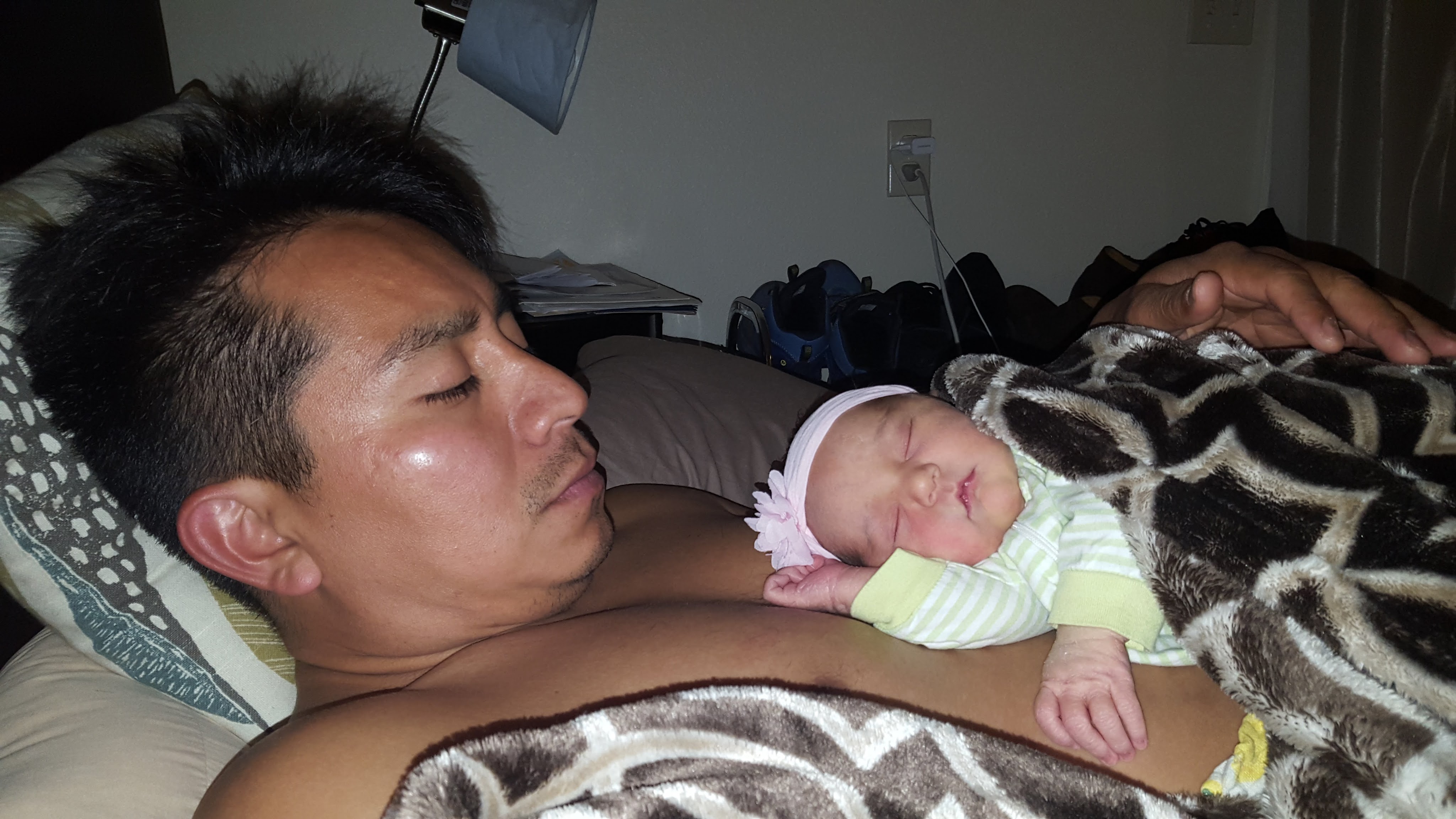
    Earlier that year, in June, I had given birth to my daughter, Emilia. I had what most Americans would call a generous maternity leave. I fully intended to return to work, find a nearby daycare, and settle into the rhythm so many families follow.

    It took one daycare tour for me to realize I couldn’t do it.

    At the same time, my mom had just retired and was planning her move to Arizona. She was the only person I felt completely comfortable leaving Emilia with. We are close — the kind of close where a move across the country feels like an amputation. The thought of her leaving, and me staying behind, felt impossible.

    So there I was. Sitting in a private office with my manager, an HR team member, and my infant daughter.

    Earlier that month I had taken a risk and submitted a request to work remotely. Our plan was simple in theory and terrifying in practice: follow my mom to Arizona. My husband would quit his job to care for Emilia full-time. I would work from home.

    This was 2017.

    Remote work wasn’t mainstream yet. I would be the first person on my U.S. team to go fully remote. But our company had global offices. We were already dialing into international meetings at odd hours. The infrastructure existed — it just wasn’t common.

    My request was approved.

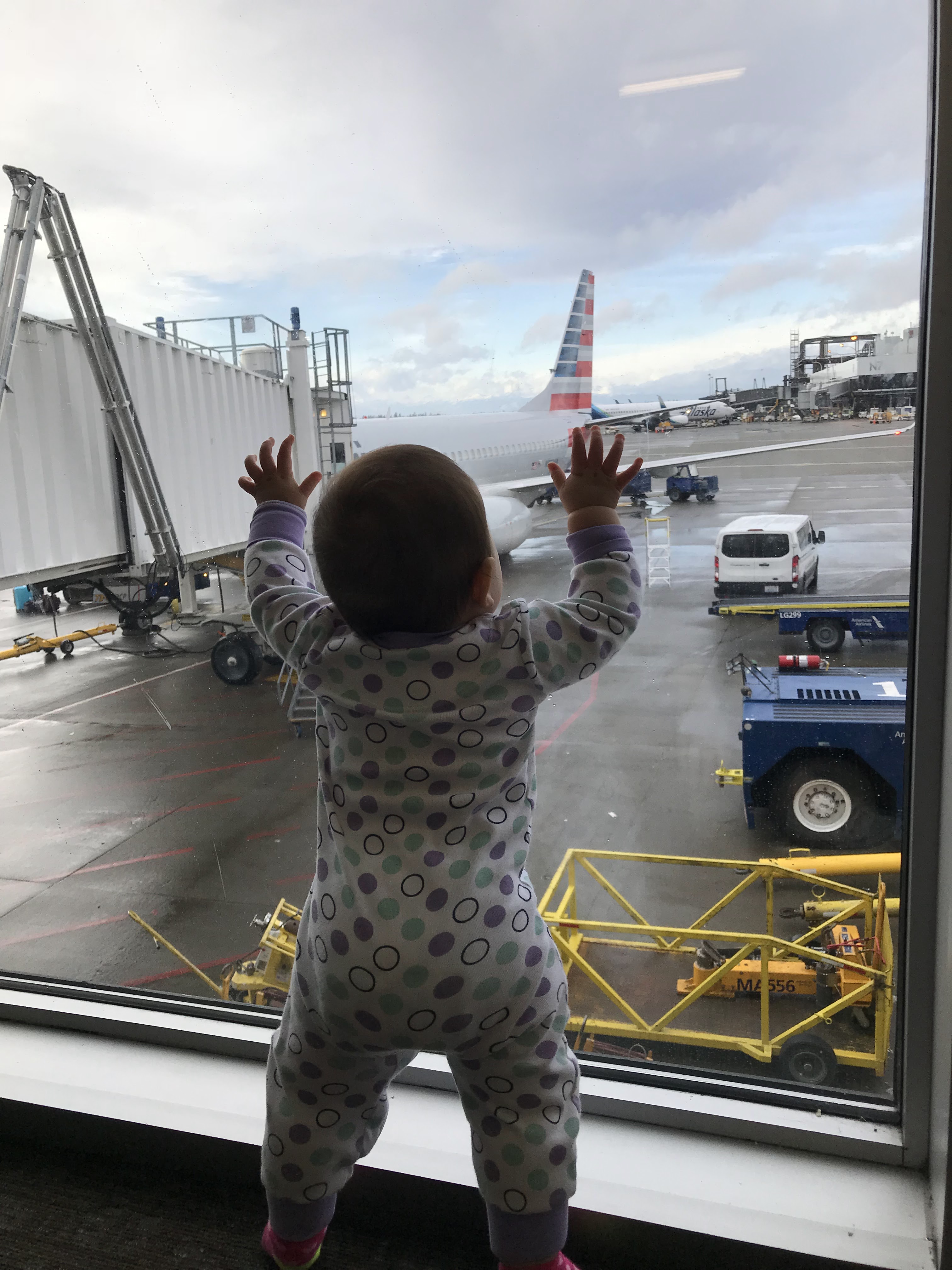
    On January 27, 2018, Emilia and I boarded a flight from SeaTac to Phoenix. Jorge drove a moving truck packed with everything we owned. We didn’t know exactly what we were building — we just knew we were choosing our family first.

    I haven’t worked in an office since.

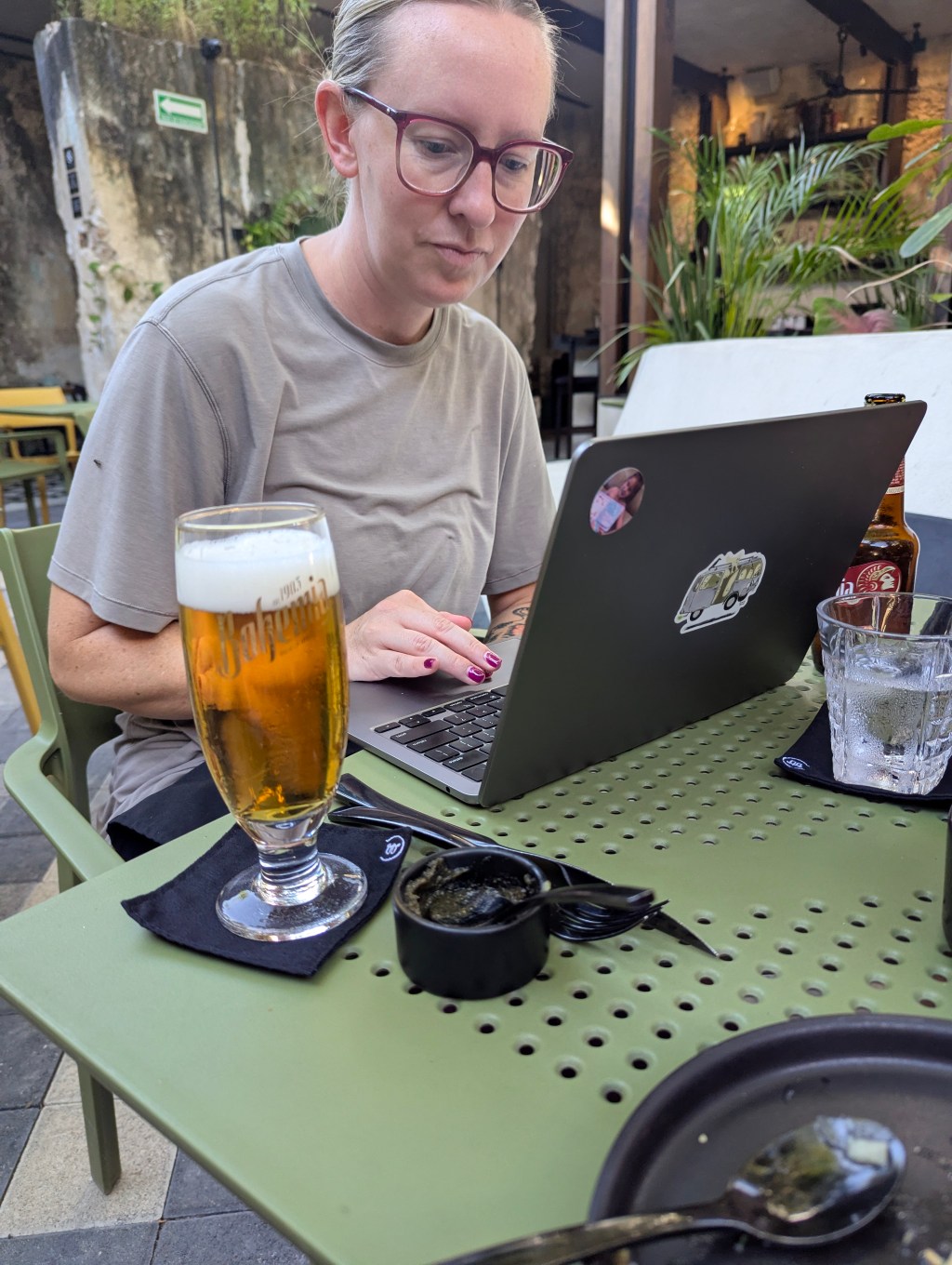
    Over the years I’ve had roles that required occasional travel. I’ve worked with teammates I’ve never met in person. Entire projects have been built through Slack threads and video calls. This is the era we live in.

    And remote work is the reason for everything that followed.

    It allowed us to move from state to state while we figured out where we wanted to plant roots. It gave us the flexibility to experiment with lifestyle instead of defaulting to geography. It eventually made our move to Mexico possible.

    Remote work is not just a location change. It’s leverage.

    When I think back to my early career, I remember the commute. The rigid schedule. The unspoken rule that productivity equaled physical presence. Eight hours in a chair whether the work took four or twelve. Time measured by badge swipes and fluorescent lighting.

    I gained those hours back.

    I gained mornings at home. Midday walks. Doctor’s appointments that didn’t require half a vacation day. I gained the ability to design my day around output instead of optics.

    I also stopped getting sick every other month. Offices are a breeding ground for shared germs, recycled air, and exhaustion cycles. Removing myself from that environment changed my health in ways I didn’t expect.

    And financially? The impact was significant.

    No daily commuting costs. No professional wardrobe churn. No convenience spending because I was too tired to cook. Fewer impulse purchases tied to corporate life. Remote work quietly increased our margins.

    Over time, those margins compounded.

    The most important shift, though, wasn’t logistical or financial.

    It was psychological.

    I stopped tying my value to a building. I stopped believing I needed to be seen to be effective. I started evaluating work based on results, not residency.

    That one request in 2017 reshaped the trajectory of my life.

    If you are sitting in an office right now feeling the tension between the life you want and the structure you’re operating inside, I understand it deeply. I was there. I made the ask before it was popular. I built the case. I took the risk.

    Remote work gave me the freedom to design our life intentionally.

    It can do the same for you — if you’re willing to ask differently.

  • The Hidden Costs of Leaving That No One Mentions

    The Hidden Costs of Leaving That No One Mentions

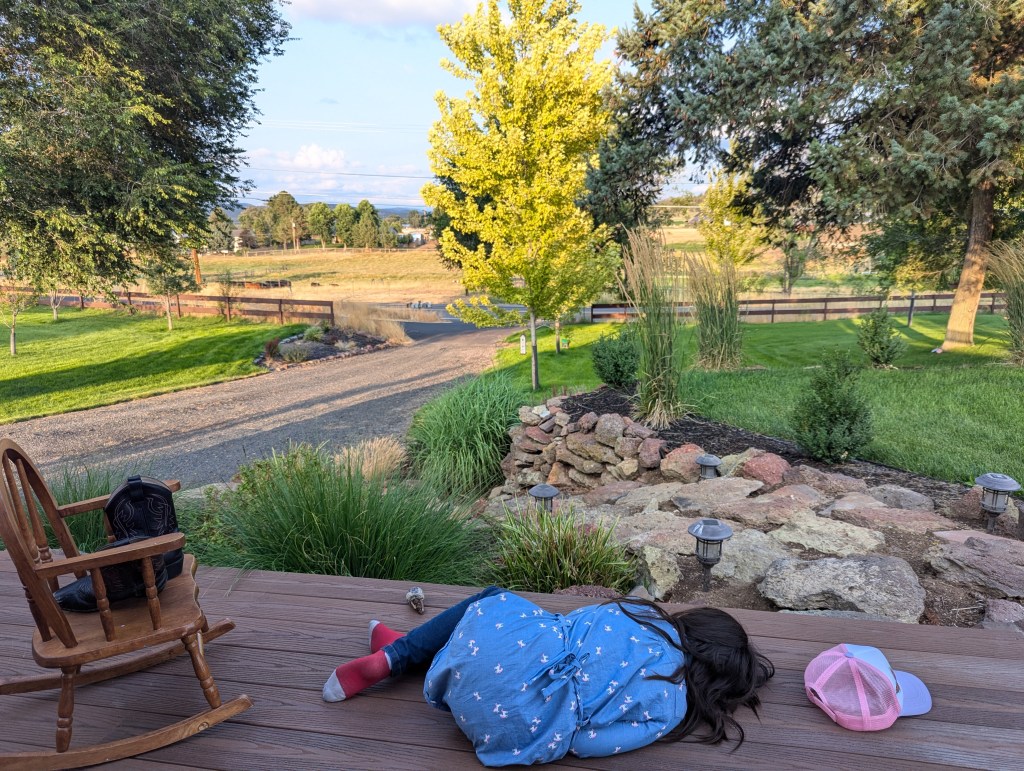
    We lived in our dream “forever” home for exactly one year. One year before we sold everything, including the house, and left the US to start a new life in a new country that was foreign to all of us. When we bought said dream house it was a milestone moment – and a very emotional one for me. We finally found a place to call home. I remember crying on the way to get the keys, listening to the Chick’s song Wide Open Spaces. God I love them.

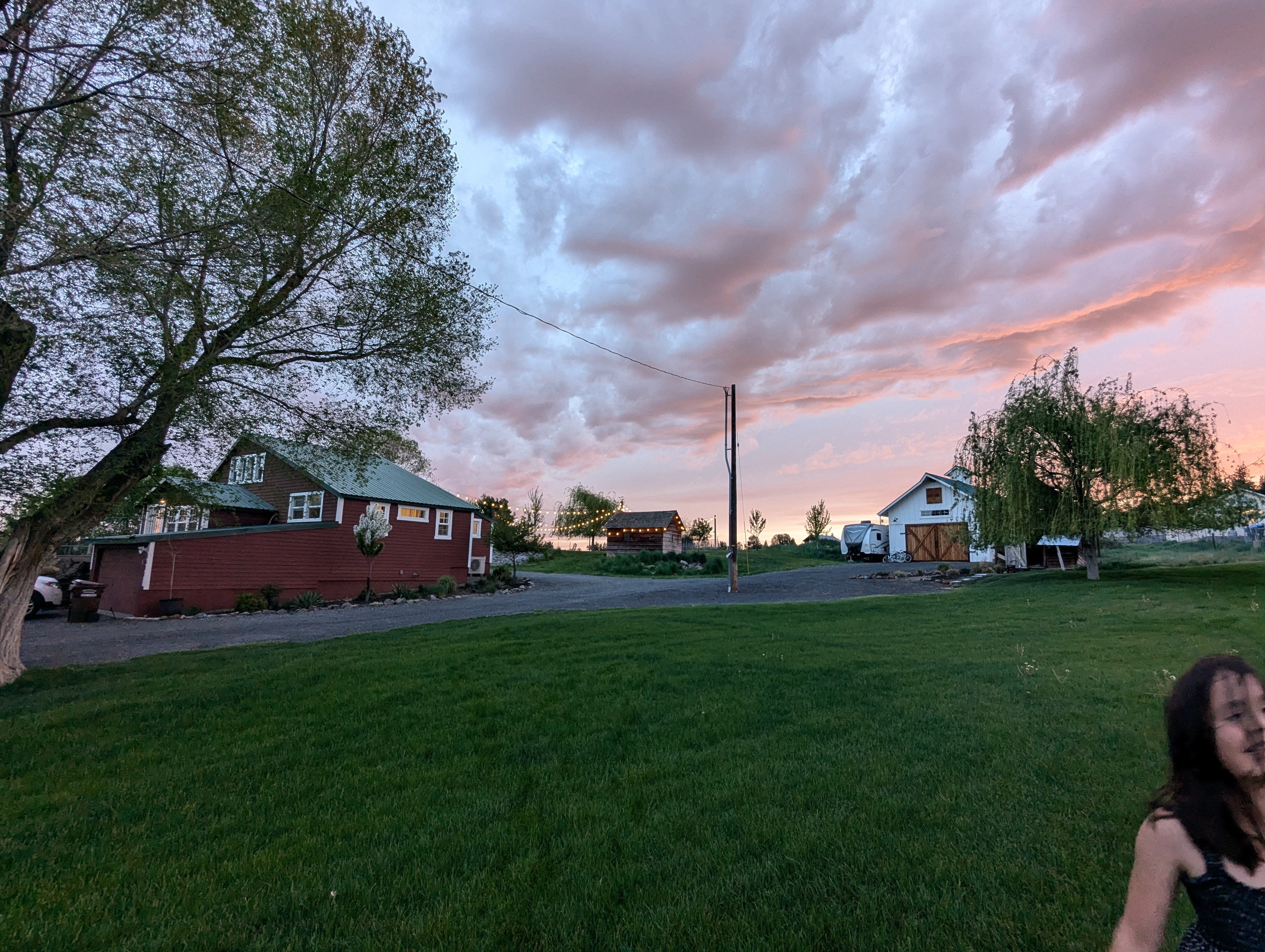
    A picturesque rural scene featuring a red house with green accents, a white barn, and lush green grass under a colorful sunset sky with clouds.
    The 1920’s homestead we thought we’d live in forever.

    We have moved once a year every year since Jorge and I were married in 2015 with just one exception – the first house we bought in Arizona which we stayed in for two years before moving to Oregon. Purchasing our 1920’s homestead in the tiny town of Prineville, OR was supposed to be the house we settled down in permanently. We all felt such relief. We were so burned out from moving around.

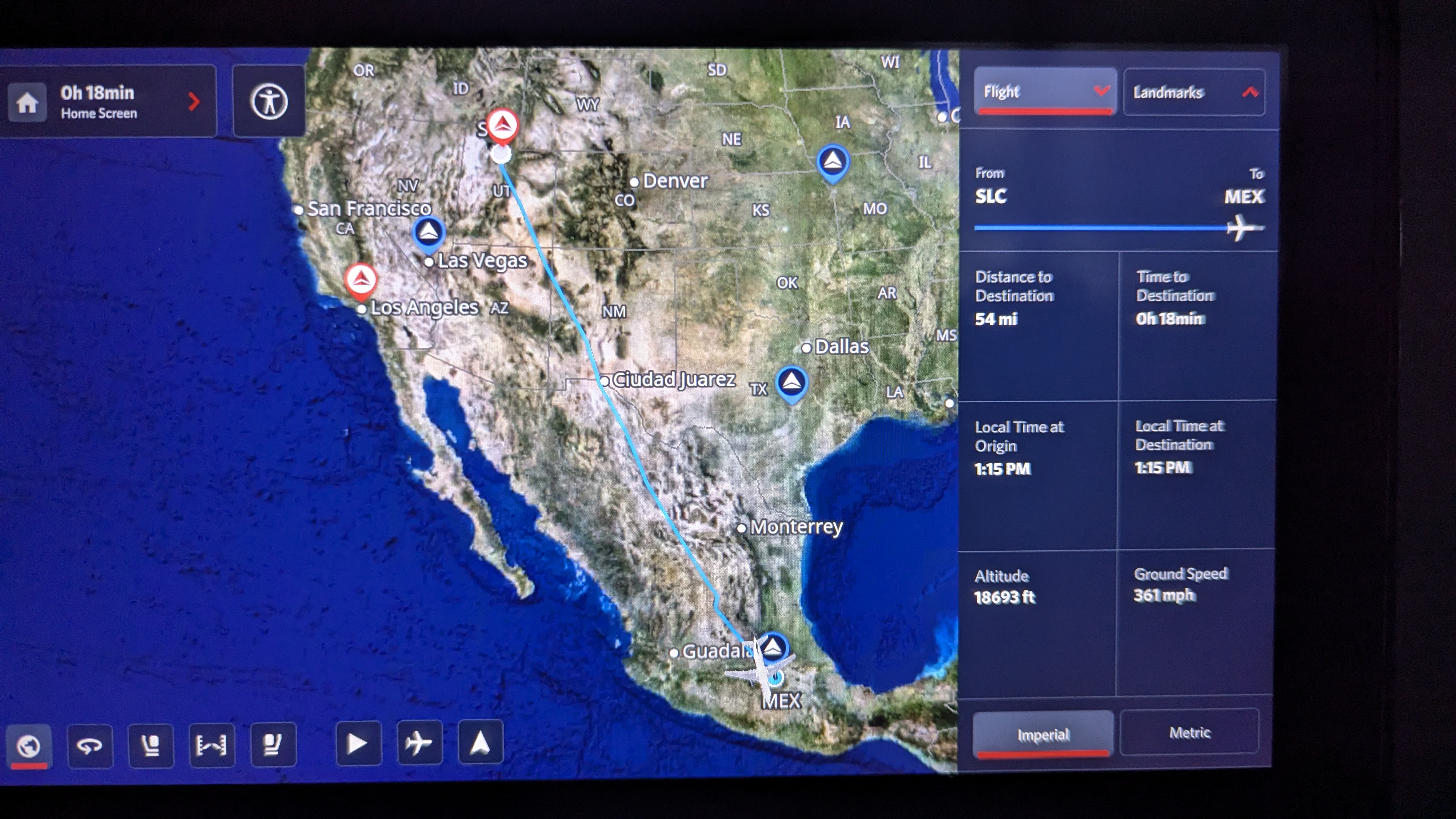
    And then one day we decided we just couldn’t stay in the US any longer. Life felt increasingly out of alignment with who we are and the life we wanted. We were quickly becoming disillusioned and everything, including the house, started to feel like a burden. So, in February of 2025 we decided to sell everything and move to Mexico. By September that same year we were headed South of the border via first class Delta Airlines.

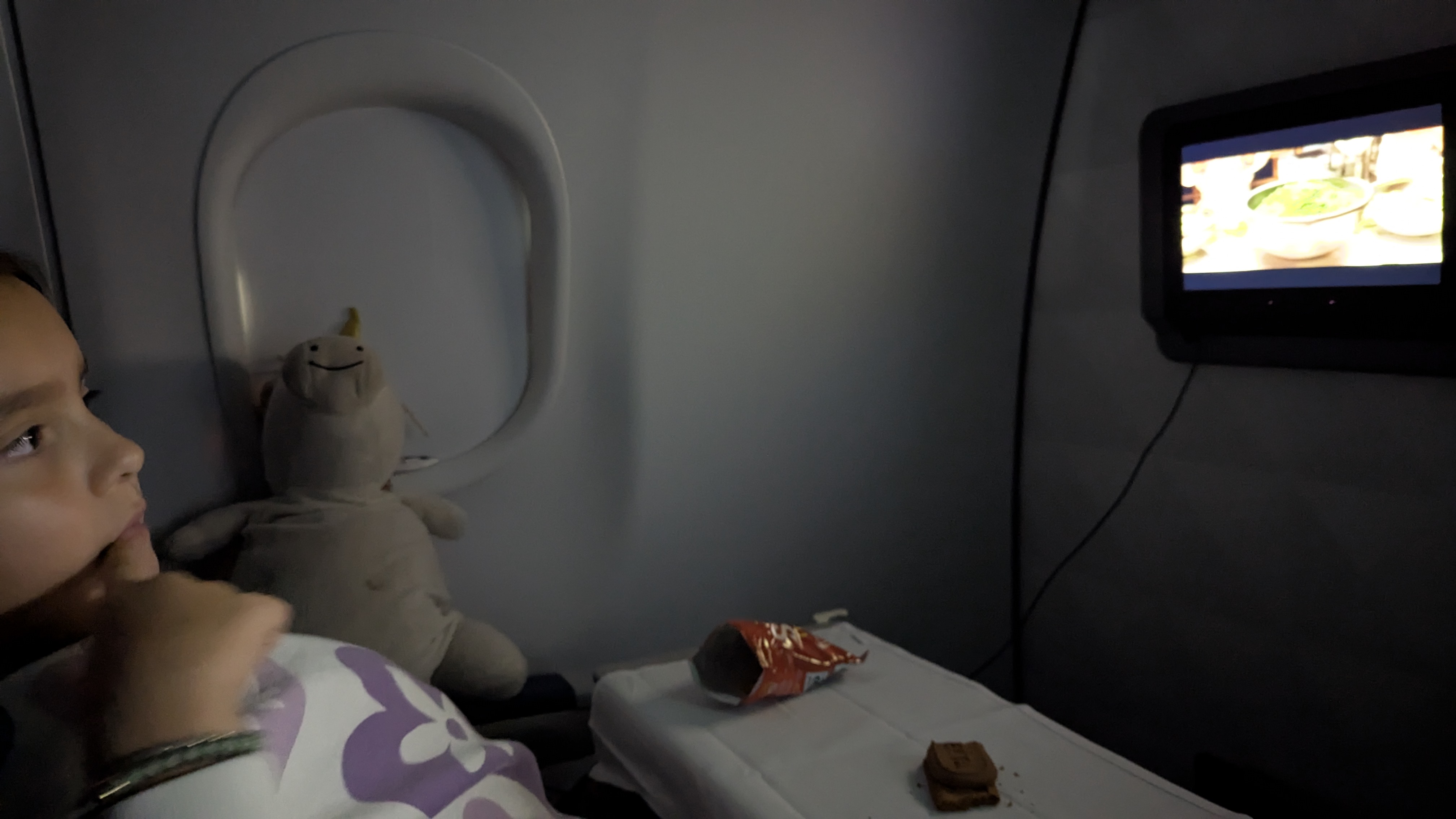
    A child watching a screen in an airplane, with a stuffed toy beside them, snacks on the table, and a window in the background.
    Our daughter enjoying the airplane ride our way from the US to Mexico.

    Selling a house is hard. Keeping it staged at all times for last minute showings while having a small child around is near impossible. Getting offers that were withdrawn or fell through was emotionally challenging. Packing only what we needed and selling the rest was physically and mentally draining. But we had tunnel vision. And because we were living in alignment everything we did seemed to just fall into place. We sold our house to perfect couple (who had actually looked at buying it when we bought it the previous year). Unloading our two cars was a breeze. Our chickens were re-home with some of our dearest friends. Things were just clicking.

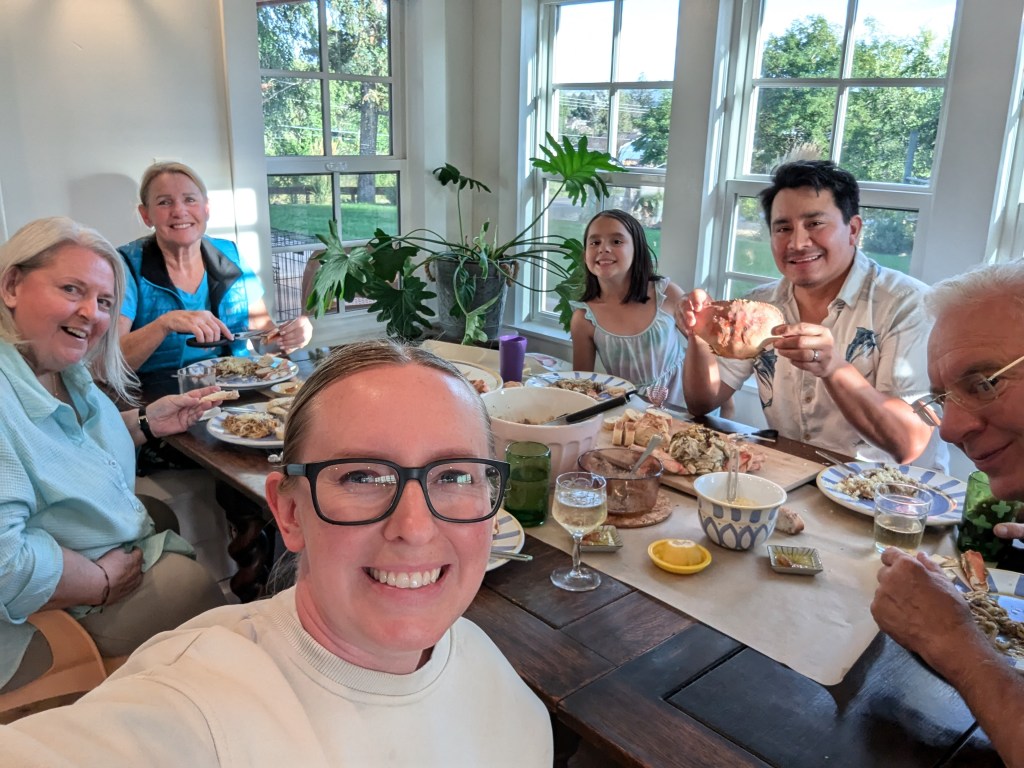
    The hardest part? Saying “see ya later” to our community. That was truly painful. I don’t think I’ve spent so much time crying in my whole life as I did in that final month leading up to our move. The silver lining? We spent a tremendous amount of quality time with all of our favorite people. We even had TWO surprise parties – one for my birthday, hosted by my mom in July, and a going away party hosted by my besties and attended by everyone in Oregon we love most.

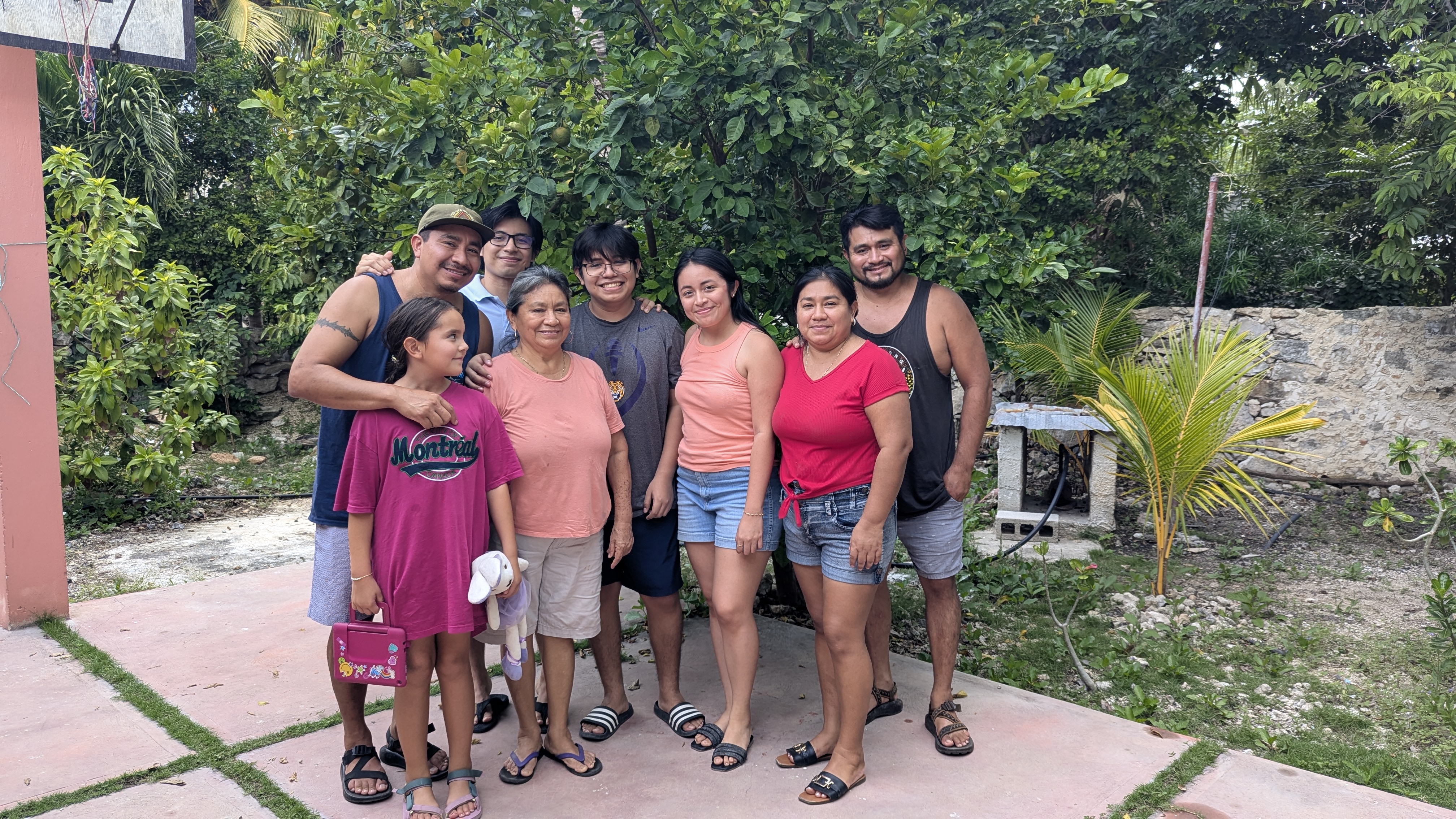
    The truth of the matter is it’s hard to leave everything and everyone you know. It’s even harder to rebuild in a new country far away from creature comforts. Maintaining long-distance relationships can be challenging and is something we still haven’t perfected. We are so lucky to have had another family and a few good friends waiting for us in Mexico. This turned out to be a life saver for us.

    A group of eight people posing together outdoors, smiling in front of lush greenery. They are casually dressed and appear to be enjoying a gathering.
    Reunited with our Mexico family. This was an incredible moment.

    We always knew we’d end up in Mexico someday. Jorge and I have talked about it basically from the beginning. Did we think it would be just as we were preparing to put down roots in the US? Absolutely not. But life has a funny way of sending messages sometimes.

    Once we landed in Mexico we were very busy having fun. I was on a two-week vacation and we spent all our time getting reacquainted with family and exploring our new home. And then it was time to go back to work and get back into schedules and routines. The following two weeks were hard. The two after that, even harder.

    When you leave the only home you’ve ever know or, in Jorge’s case, your home for the past two plus decades, it’s freakin’ hard to adjust. We were frustrated to the point of tears on more than one occasion, and constantly grappling with a reality we weren’t used to and couldn’t control.

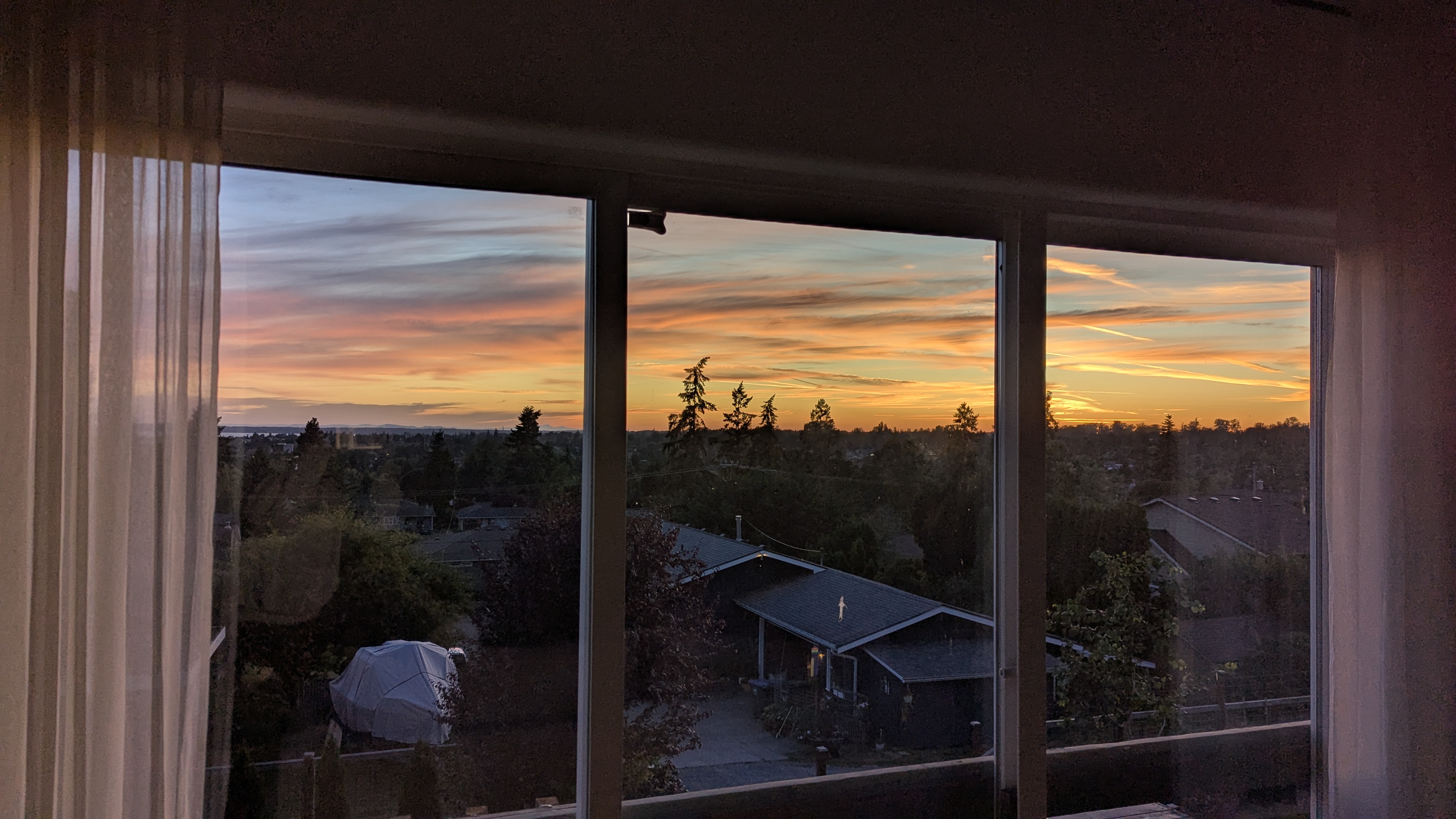
    A beautiful sunset viewed through large windows, with vibrant orange and purple hues in the sky, silhouetted trees, and houses visible in the foreground.
    The view from a trip up to Washington before we left the US.

    Renting a house was hard. Buying a car was hard. Driving around town was hard. Getting passports was hard. Understanding how things work here was (is) hard. In hindsight we can giggle about how much we struggled to do even the simplest of things, but in the moment it didn’t feel funny at all.

    We’re still adjusting. I’m not fluent in Spanish (but I’m getting there!) and that has felt quite challenging. It’s awkward and frustrating not being able to communicate as we navigate through everyday life. And it’s annoying for both Jorge and I to have to have him constantly translating in conversations. I can’t tell you how many times I’ve wanted to say something in conversation and just couldn’t find the words. I so look forward to the day when I can sit at the dinner table and just chat with my in-laws.

    Some things we miss from home in the US include predictability and reliability. In the US, we knew how things worked. We knew what to expect. Things were easy. In Mexico? We feel like little kids walking around never knowing what’s going on and crying for our mommy’s. Mexico does things a little different, and by that I mean you’ll get a different answer for everything depending on who you talk to. We’re slowing but surely figuring it out but still feel frustration over vague

    And then there’s home life. I have the same work I did before, but everything else is different. We’re having to redefine our family dynamics. It’s honestly been tiring but so rewarding. My relationship with my husband has never been better. We have plenty to figure out still, but the way we’ve grown together has been a truly special thing.

    Moving to Mexico has given us space to rediscover and redefine ourselves and our family. It’s also brought to light the things that we can’t run away from. Throughout it all we’ve had to learn humility and a level of patience we’ve not had to exercise up until now.

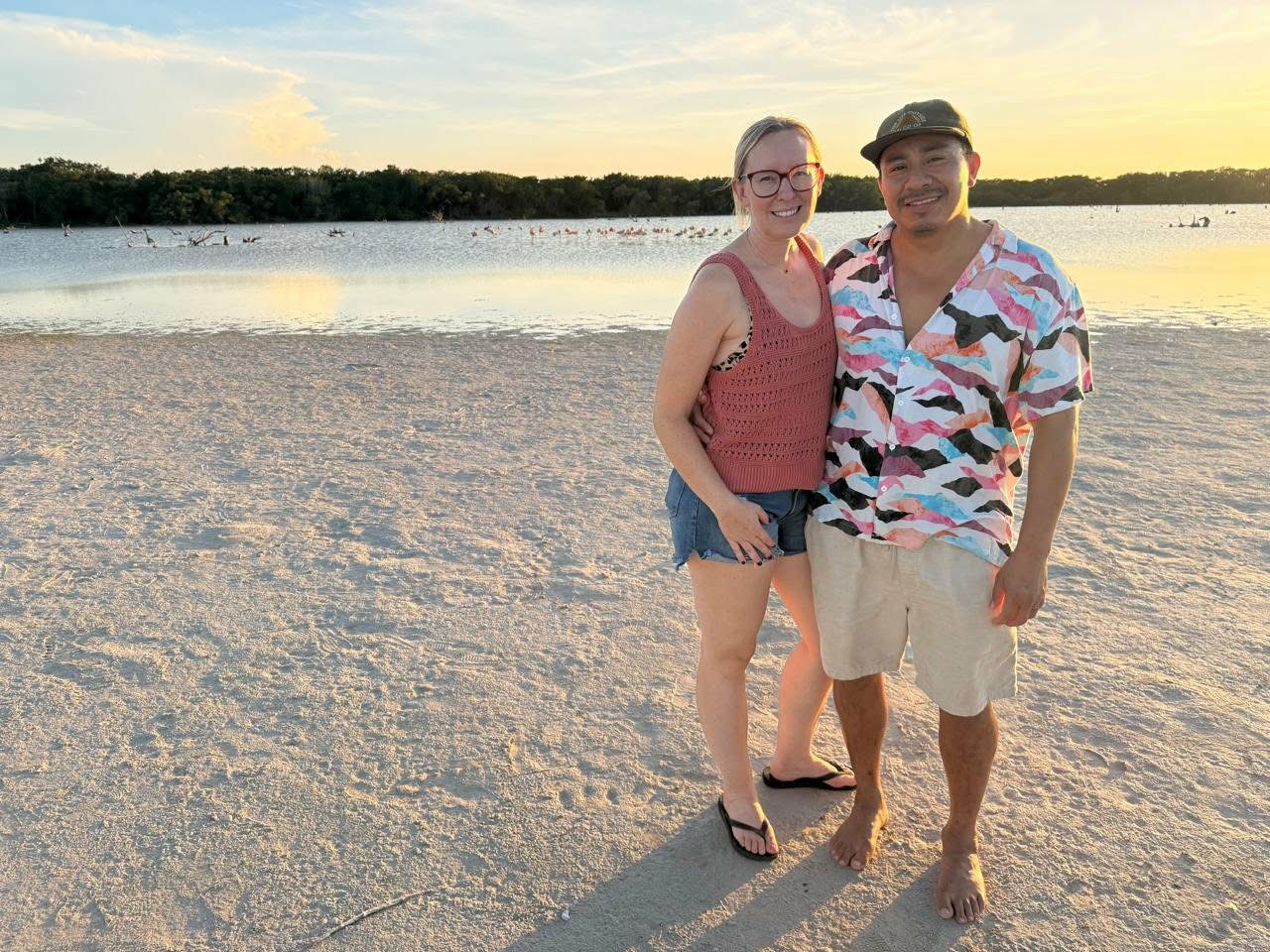
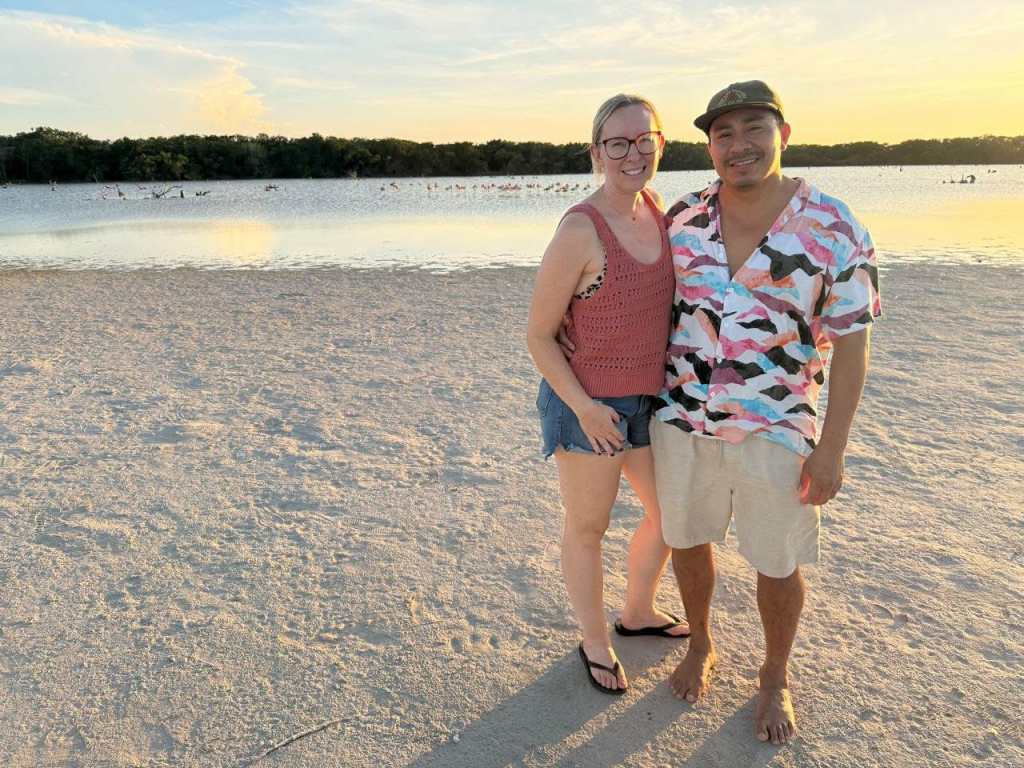
    A man and a woman stand together on a sandy beach at sunset, with a calm water body in the background and silhouettes of trees along the shore.
    Jorge and I enjoying a moment on a flamingo tour after moving to Mexico.

    We’ve certainly had moments of uncertainty here in Mexico. Moments where we’ve wondered if we did the right thing. If Mexico is the right place for us. For me, moving to Mexico has helped me know myself better. I’m in a place where I’m constantly inspired. Constantly be challenged which always results in growth of some sort. Moving came at a cost. But what we’ve gained – and the life we have ahead of us, has made the sacrifice worth it.

    My parting wisdom to you should you be considering a big move or maybe having just moved is this. Leaving your home comes at a great cost. The growth, strength and wisdom you’ll receive from experiencing something new will be the biggest gift you could ever give yourself, but only if you’re open to it.

    Comfortably Uncertain,

    Krista

  • Are You Ready to Move, or Do You Just Need a Vacation?

    Are You Ready to Move, or Do You Just Need a Vacation?

    My husband, Jorge, and I started talking about moving to Mexico practically from the day we met. For twelve years, it was this fantasy we created only in our minds. I think it took us that long to build a partnership that felt safe enough to do something like sell our house and all our belongings, say goodbye to family and friends, and move to a completely foreign land. But that’s a story for another day. It also took us that long to be in a position to live and work from outside the US.

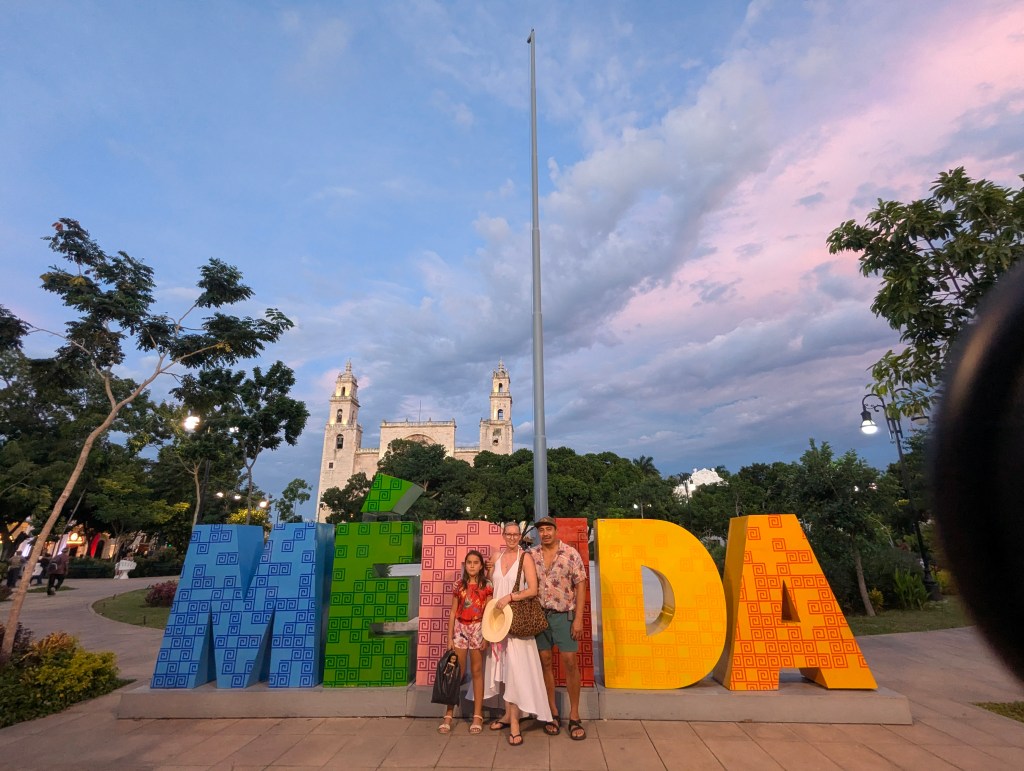
    I remember when we made the decision. And like with all things in my life, when I make a decision, I start making moves immediately. I had never been so certain of anything in my whole life, except for marrying Jorge and having a baby. In February 2025, we decided it was time. On September 14th of that same year, we boarded a plane destined for Merida, Yucatan.

    You know that feeling you get at least a couple of times a year that feels like you need to change everything about yourself and your life? It’s a sudden dissatisfaction with everything around you. Well, the good news is you probably just need a vacation (or maybe a nap). When you come back home, it’s like you’re new again, ready to conquer the world. Well, that’s not how it went for us.

    We started feeling discontent with the general state of things years ago, but it came to a head in late 2024. By February 2025, when we made the decision to move, we knew something had to change. And not in the “I need a piña colada and a pool day” kind of way. Something needed to change fundamentally.

    The funniest part about all of this? In August of 2024, we purchased our dream home—lovingly deemed “the farm”—in the tiny town of Prineville, Oregon. It was a 1920s homestead on two acres with the most beautifully landscaped yard. There was already a chicken coop, a custom-built barn, a tree swing, and a riding lawn mower to boot.

    Our dream house nestled in Prineville, Oregon. A red, 1920's farmhouse with partial wraparound porch and beautiful landscaping surrounding it.
    “The Farm” – our 1920’s dream house on an original homestead in Prineville, Oregon.

    This house represented so many things for us: accomplishment, completeness, and permanence, to name a few. This house was a LOT of work, but it held so many possibilities for us as our “forever home.” With it, we also found a new community of beautiful people, and a school our daughter was thriving in. Even better, we were five minutes away from my mom and step-dad.

    It’s funny, because in hindsight, I see immediately how out of alignment the whole thing was. Purchasing the farm was hard. We had purchased four homes prior to this one, and none of them required half the effort this one did. It was also extremely hard—and, quite frankly, a total pain—to maintain the farm. Spoiler alert: old houses have a lot of problems.

    There was something else, though, lurking just below the surface. The political climate in the US was getting really intense. The sentiment toward brown people was shifting fast. Violence in schools was getting too close to home, with several threats in various schools throughout our little town of 12,000 people.

    We were also dissatisfied with the little things. Grocery shopping was a pain, needing to visit several shops to get everything we needed. Making the 50-minute drive into Bend several times a week to see friends, tend to our rentals, or go to an event was getting tiresome. Limited opportunities in Prineville that aligned with our interests were a bummer.

    Reading back through that, it’s like, oh, poor us. Had everything we wanted and still weren’t happy. Trust me, I know. But when I tell you we were so out of alignment, that’s what I mean. Nothing could have satisfied us. And let me tell you, the SECOND we decided to move to Mexico, things started falling into place with such ease. I mean, like crazy alignment happened and things just clicked.

    And that was that. Sure, it was a ton of work, and no, it wasn’t ideal to be moving again right after thinking we had found a place to settle permanently. But the work didn’t feel hard. Selling, donating, and giving away our personal belongings was physically and mentally the hardest part, simply because we had accumulated so much crap. The rest was a breeze. We sold the house to the most perfect couple, got rid of the cars, re-homed our chickens, and spent our final months in the US spending lots of quality time with family and friends—and doing the things we loved most in Bend, the town we moved to five years prior with a dream and my cardigan 😉.

    So for us, we didn’t just need a vacation. We needed a fundamental shift. We didn’t (and still don’t) have all the details worked out, but we knew where we were headed and that we would figure things out along the way. And you know what? It’s the best decision we’ve ever made.

    So which one are you? Do you just need a vacation, or do you need a change of scenery in a permanent sense? If you’re not sure, do I have the thing for you. I reflected on all the ways our move has changed our lives and created this nifty 20 Questions to Ask Yourself Before Moving to a New Country questionnaire. Check it out here!